Mount Kilimanjaro
Mount Kilimanjaro
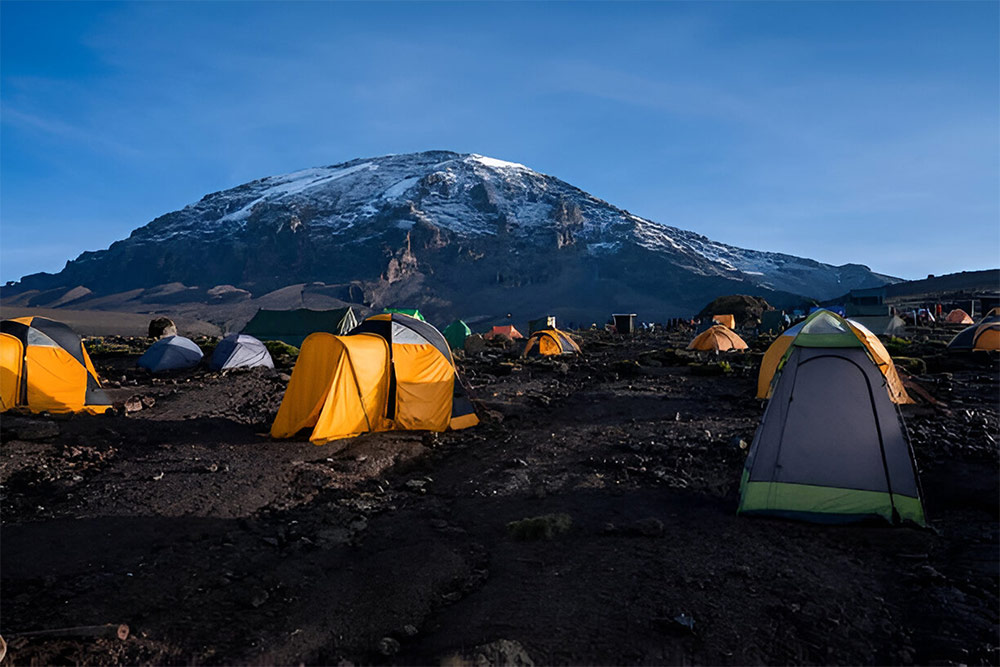
Towering over Tanzania’s savannas, Mount Kilimanjaro, affectionately nicknamed “The Roof of Africa,” is the continent’s highest peak. This awe-inspiring stratovolcano, with its snow-capped summit reaching a staggering 5,895 meters (19,341 feet) above sea level, is a beacon for adventurers and a symbol of Tanzania’s natural grandeur.
Beyond its sheer size, Kilimanjaro is captivated by its diverse ecological zones, rich cultural significance, and unique challenges and rewards that it offers climbers.
A Journey Through Time: Geological Formation of Kilimanjaro
Kilimanjaro’s story began millions of years ago. The mighty peak is not a single volcano but a complex of three distinct volcanic cones: Kibo, the highest and youngest; Mawenzi, a partially collapsed volcano to the east; and Shira, the oldest and most eroded cone to the west.
These volcanoes were formed through the movement of tectonic plates, with molten rock erupting and solidifying over time. Kibo, the youngest and most active cone, last erupted around 200,000 years ago, with its peak still containing a fumarole (a volcanic vent emitting steam and gases). While currently dormant, Kibo holds the potential for future eruptions.
A Tapestry of Climates: From Lush Rainforests to Icy Glaciers
Kilimanjaro’s slopes boast a remarkable range of climatic zones, offering a microcosm of ecosystems within a single mountain. As you ascend, the temperature drops, and vegetation changes dramatically.
- The Base (Up to 1,800 meters/5,900 feet): The foothills are characterized by lush rainforests teeming with diverse plant and animal life. Coffee plantations and traditional villages can be found in this fertile zone.
- The Montane Forest (1,800 – 2,800 meters/5,900 – 9,186 feet): This zone gradually transitions from rainforest to montane forest, with tall trees giving way to shorter shrubs and wildflowers. Birds like the colorful turaco and the elusive black-and-white colobus monkey can be spotted here.
- The Heath Zone (2,800 – 4,000 meters/9,186 – 13,123 feet): As you climb higher, the landscape becomes dominated by heathland, characterized by Erica shrubs and other low-lying vegetation. This zone provides habitat for small mammals like hyraxes and antelope.
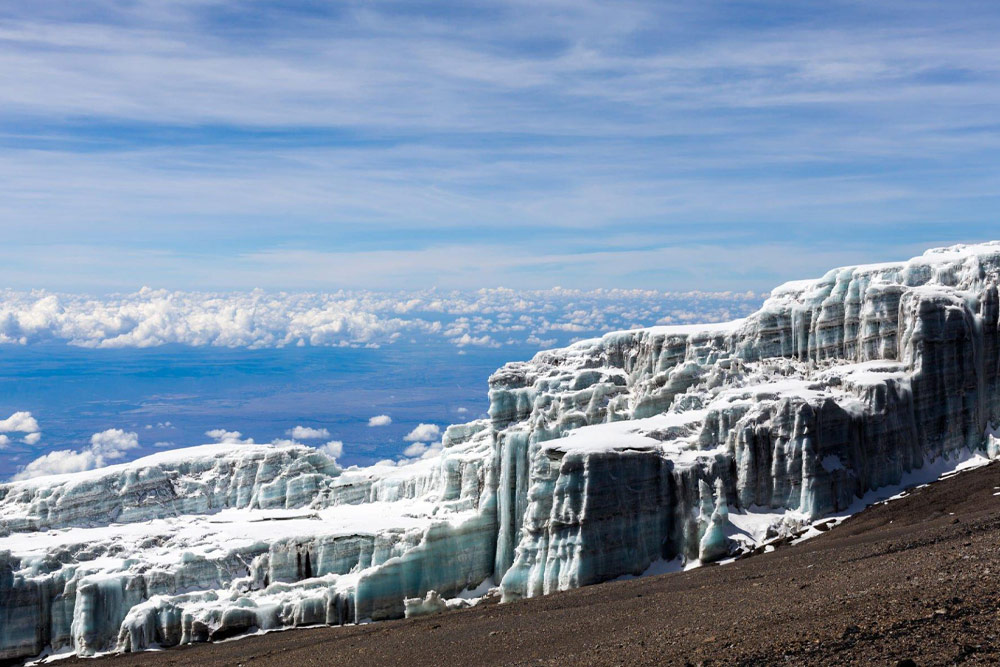
- The Alpine Desert (4,000 – 5,895 meters/13,123 – 19,341 feet): This harsh environment is characterized by sparse vegetation, scree slopes, and permanent ice fields. Acclimatization becomes crucial as altitude sickness poses a significant risk. Spotting the Decken’s sifter bird, a high-altitude specialist, is a rare treat.
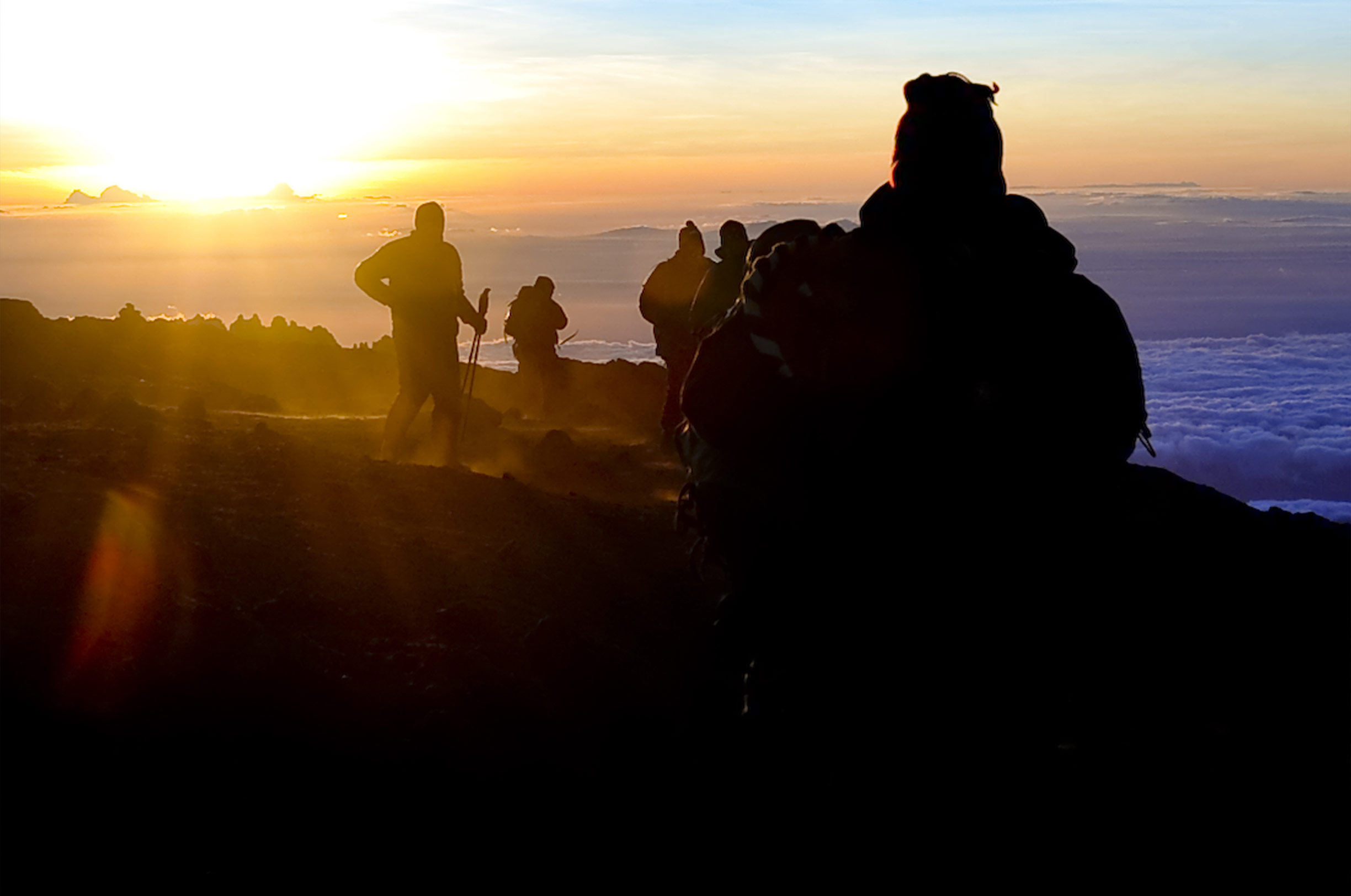
The summit of Kilimanjaro, often shrouded in clouds and icy winds, presents a dramatic and challenging final ascent. The reward, however, is breathtaking panoramic views of the surrounding landscape and the immense sense of accomplishment for reaching the highest point in Africa.
Climbing Kilimanjaro
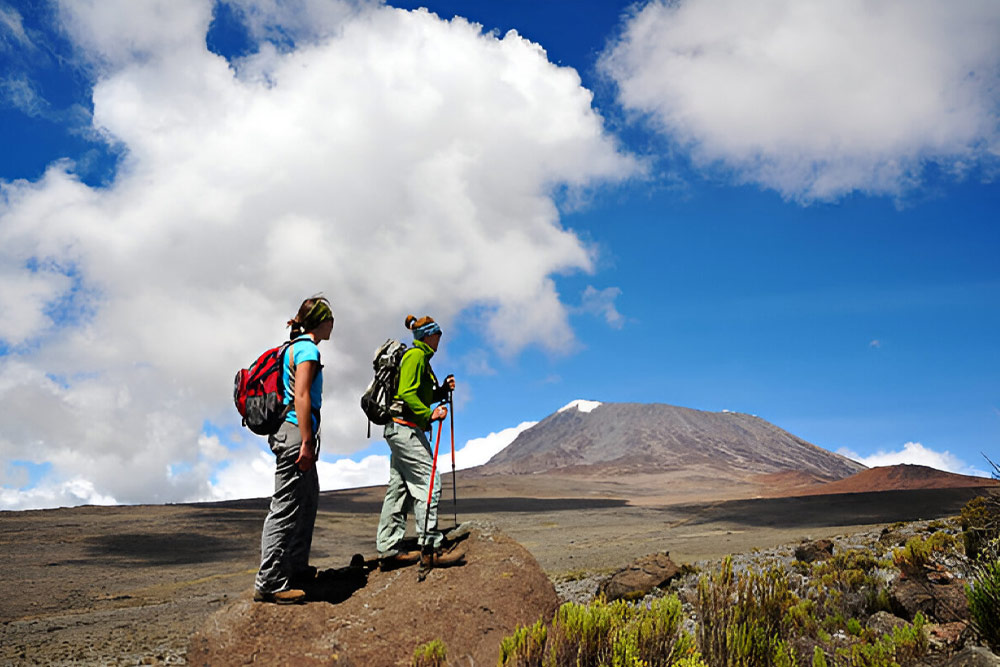
Mount Kilimanjaro is a popular destination for climbers, drawing thousands of adventurers each year. Unlike many high peaks, Kilimanjaro does not require technical climbing skills, making it accessible to relatively inexperienced climbers. However, the ascent is still physically demanding due to the high altitude and varying climatic conditions.
Popular Routes
There are several routes to the summit, each offering unique experiences and challenges:
- Marangu Route: Known as the “Coca-Cola” route, it is the only path with hut accommodations, making it a popular choice. It is considered the most accessible route but has a lower success rate due to its shorter acclimatization period.
- Machame Route: The “Whiskey” route is more challenging and scenic, passing through diverse ecosystems. It has a higher success rate due to better acclimatization.
- Lemosho Route: A longer, less crowded route offering spectacular views and excellent acclimatization opportunities.
- Rongai Route: Approaching from the north, it is drier and less frequented, providing a different perspective of the mountain.
- Umbwe Route: The steepest and most direct route, suitable for experienced climbers seeking a rigorous challenge.
Acclimatization and Health Risks
Climbers must be mindful of the risks associated with high altitude, primarily acute mountain sickness (AMS). Proper acclimatization is essential for a successful ascent, involving spending additional days at intermediate altitudes to allow the body to adjust to lower oxygen levels. Acute Mountain Sickness (AMS) symptoms include headache, nausea, and fatigue. Severe cases can lead to life-threatening conditions such as high-altitude pulmonary edema (HAPE) and high-altitude cerebral edema (HACE).